What Is Solid Surface? A Complete Beginner's Guide
Learn what solid surface is made of, its benefits, applications, and limitations, plus how professional fabrication creates inconspicuous joints.
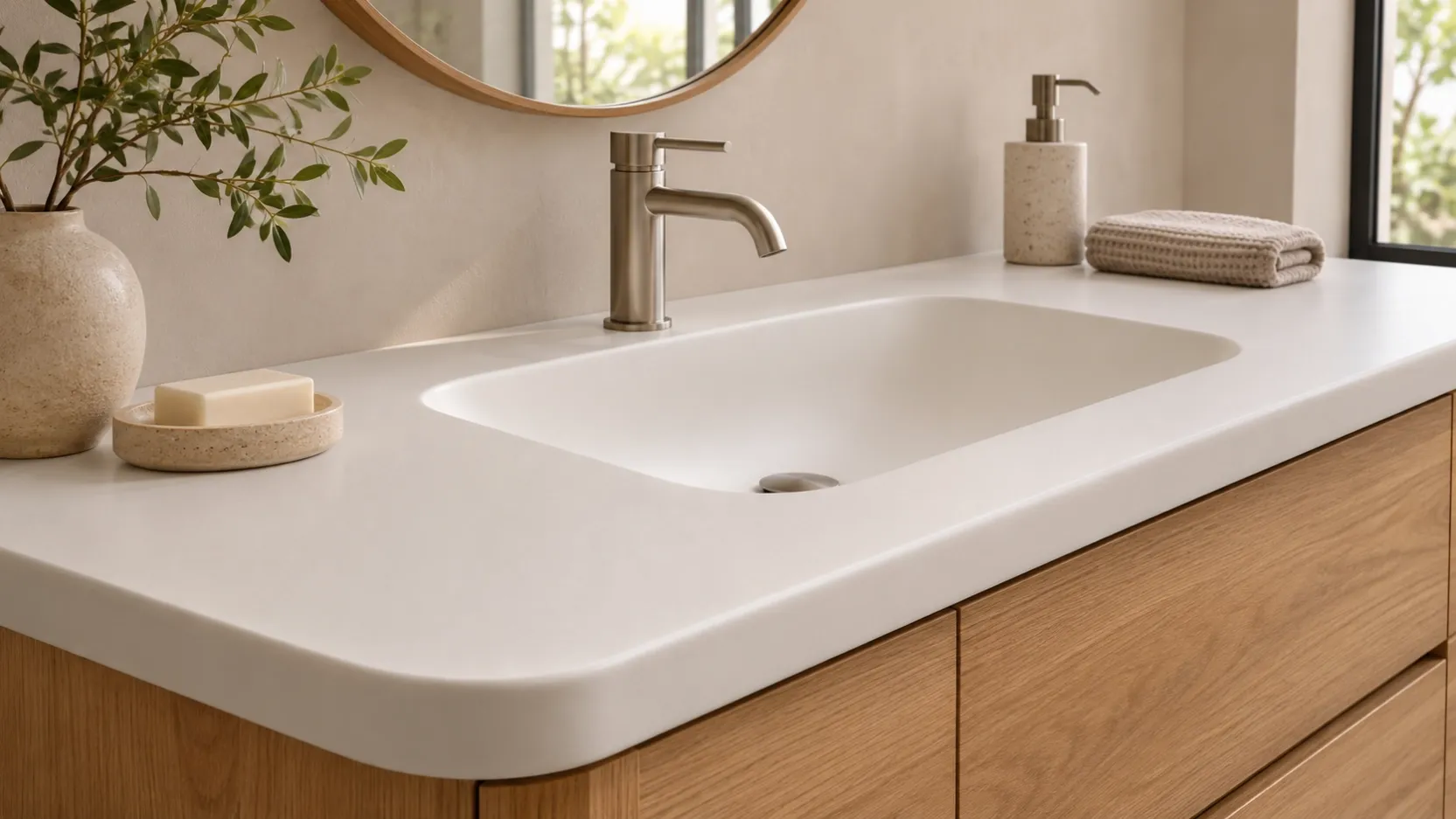
Solid surface is a manufactured material used for countertops, vanities, reception desks, and wall panels. Fabricators can join pieces with discreet seams, shape selected sheets into curves, and repair many kinds of damage. This guide explains its composition, main types, differences from other surfaces, and when its design flexibility is worth choosing.
What Is Solid Surface and What Is It Made Of?
Here, solid surface means a homogeneous, resin-bound sheet material. “Artificial stone” is broader: engineered quartz is also manufactured, while sintered stone is made by a different process.
Most solid surface sheets combine three groups of ingredients:
- A resin binder holds the sheet together. Depending on the product, it may be acrylic, polyester, or a blend.
- Mineral filler gives the material body. Alumina trihydrate, often abbreviated ATH, is a common example in acrylic solid surface.
- Pigments and decorative particles create solid colors, speckles, and stone-inspired patterns.
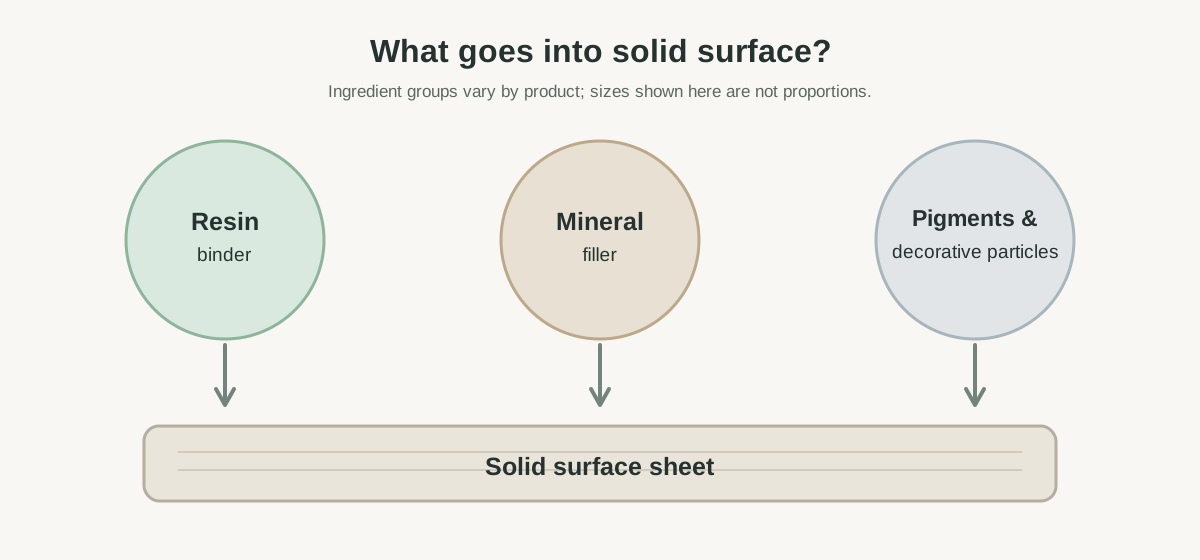
Illustration: the three ingredient groups commonly discussed in solid surface specifications. It is not a formula or a statement of their proportions.
Recipes vary. Corian describes its solid surface sheets as approximately one-third acrylic resin and two-thirds minerals; that figure does not apply to every brand. Its bulletin notes a different resin system for some sinks and lavatories. Ask for the technical data sheet of the exact product you plan to buy.
What Are the Main Types of Solid Surface?
Buyers commonly encounter pure acrylic, modified acrylic, and polyester solid surface. These labels are starting points, not complete performance specifications.
Pure acrylic uses an acrylic resin system. Modified acrylic generally combines acrylic with another resin, commonly polyester. Polyester solid surface uses polyester as its main binder. Formulation and fabrication limits vary within each group.
Ask the supplier to identify the resin system and provide fabrication guidance. A color sample helps you judge how a pattern looks across a seam. We compare the three resin systems in detail in a separate guide; for now, verify the specific product.
How Does Solid Surface Compare with Quartz, Sintered Stone, and Natural Stone?
These materials are made and fabricated differently. Performance depends on the selected product and installation.
| Material | How it is made | What to consider for a project |
| Solid surface | Mineral filler and pigments held in a resin binder | Discreet color-matched joints, selected curved forms, and repair options are important design reasons to consider it. Protect it from direct high heat. |
| Engineered quartz | Quartz-rich aggregates, resin, and pigments compacted into slabs | Often selected for a harder-feeling worktop surface. Seams and edge details still need planning; follow the maker's heat guidance. |
| Sintered stone | Minerals consolidated through high pressure and firing | Often considered where heat, UV exposure, or an exterior application matters. Cutting and installation methods differ from resin-bound sheets. |
| Natural stone | Quarried and cut stone such as granite or marble | Each slab has natural variation. Porosity, care, and suitability depend on the particular stone and finish. |
For a curved desk or a counter that flows into a matching sink, solid surface can create a visually continuous installation. Compare samples and technical documents before specifying a material.
What Is Solid Surface's Biggest Advantage?
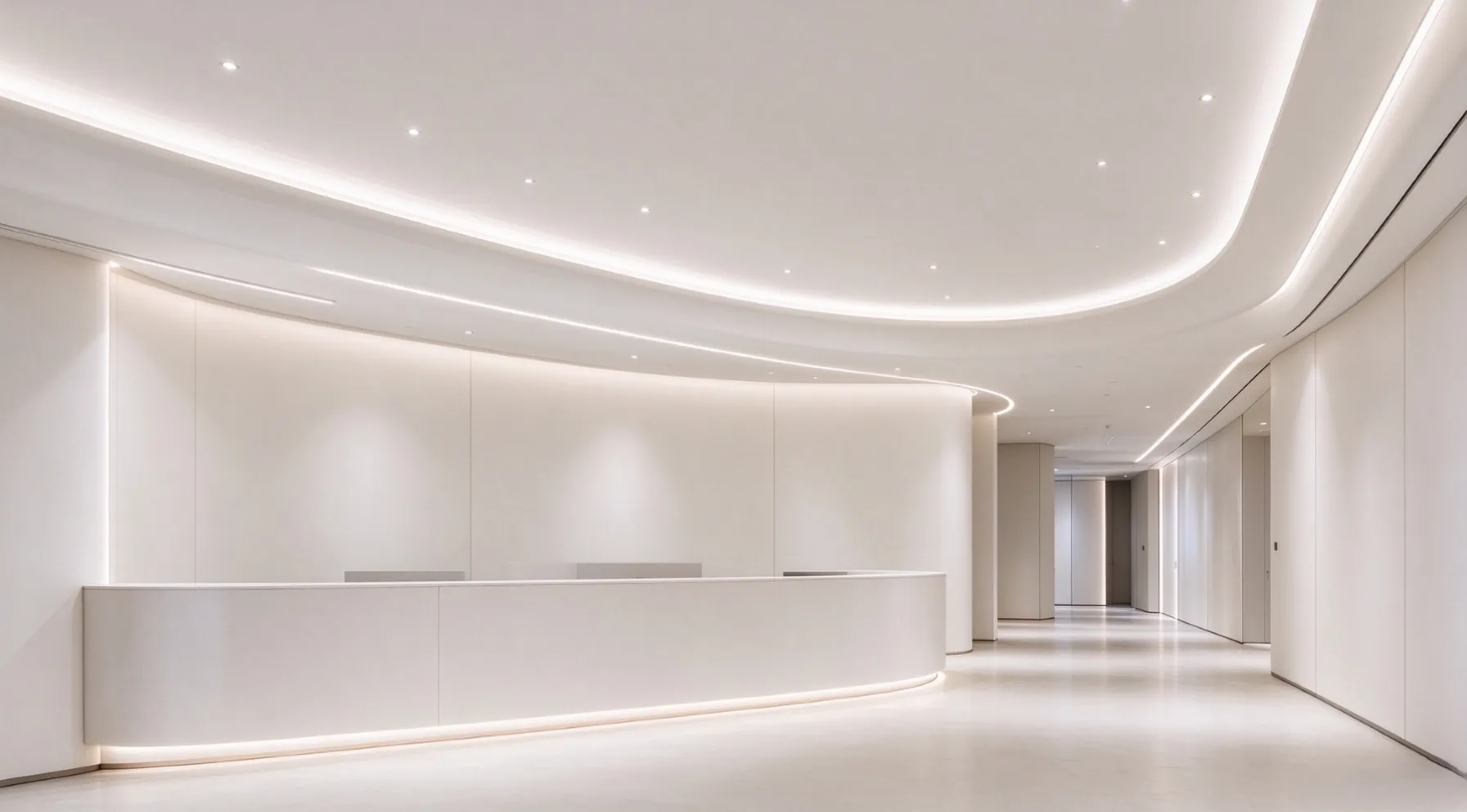
Its standout advantage is design continuity. Color-matched pieces can make a long counter read as one surface. Suitable sheets and fabrication methods also allow curves, raised edges, integrated backsplashes, and coordinated basin surrounds.
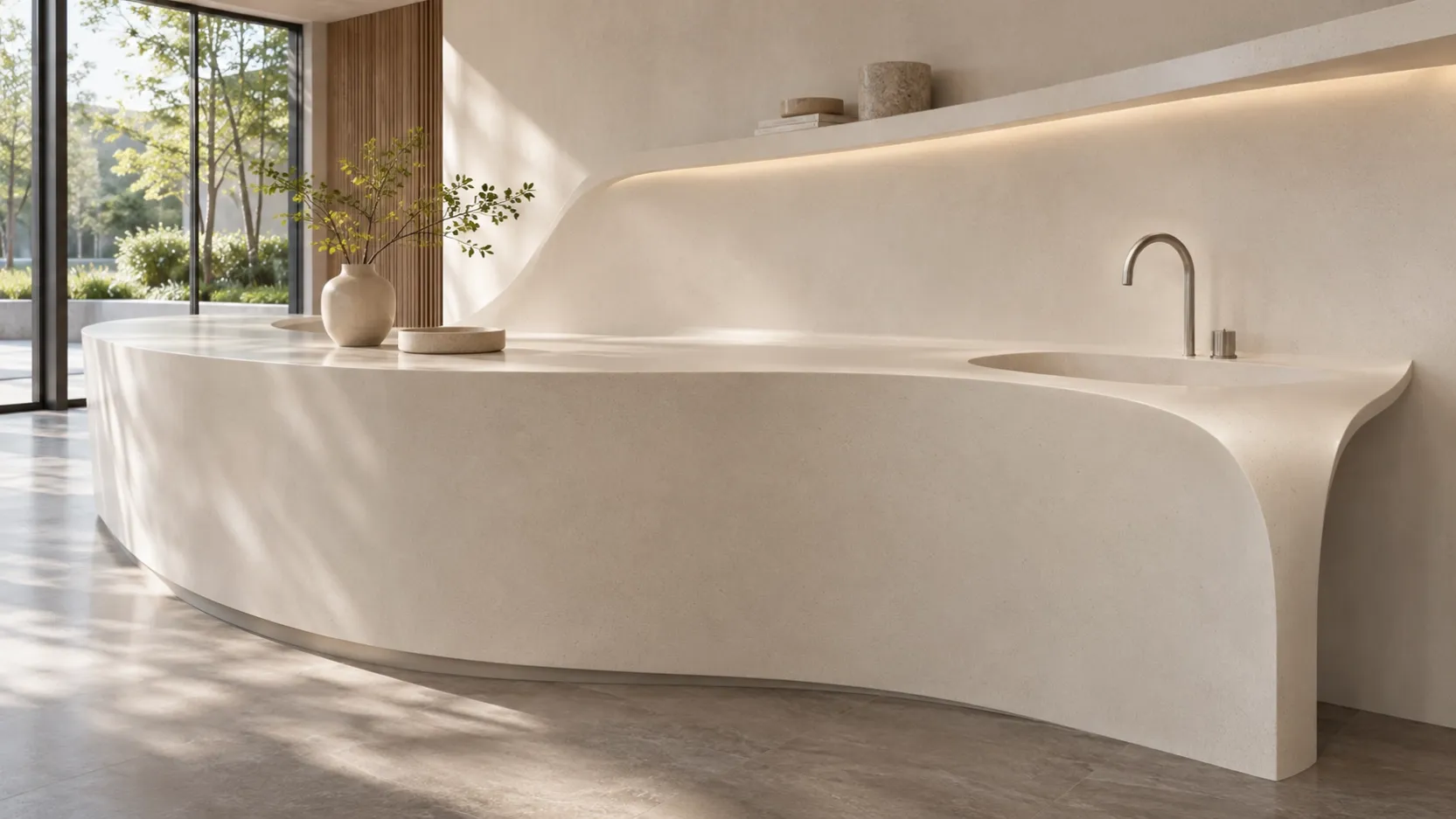
Concept illustration: a flowing counter, integrated basin, and continuous backsplash show possible design directions. This is an original visualization, not a photograph of a completed customer project.
Consider a curved hotel reception desk, a kitchen counter with an integrated backsplash, or a clinic counter with fewer exposed joints to clean around. The sheet, adhesive color, seam placement, and installer skill all affect the result.
“Seamless” should not be taken literally. Joints exist, and their visibility depends on color, pattern, lighting, and workmanship. Highly veined or irregular patterns can be harder to align than uniform colors. Some solid surface products can also be refinished or repaired after damage, which can extend the useful life of a well-designed installation. The available repair method depends on the material and the extent of damage.
Forming radii, sheet thicknesses, support details, and heat exposure must follow the selected manufacturer's instructions. A fabricator should confirm that the chosen sheet can make the proposed shape.
When Should You Choose Solid Surface?
Start with the result you want. If discreet joints, integrated shapes, coordinated color, and future repairability are central to the brief, solid surface deserves a close look. If the project involves repeated direct contact with hot cookware, unusual outdoor exposure, or a particular scratch-resistance requirement, compare the alternative materials and their documented limitations before deciding.
For a quotation, send the application, drawings or dimensions, color and pattern, desired curves or sink detail, and installation environment. For joined pieces, include a sample or exact color reference so the adhesive can be matched and tested.
Frequently Asked Questions
Is solid surface the same as quartz?
No. Solid surface is a resin-bound sheet with mineral filler; engineered quartz is made with a much higher proportion of quartz-rich aggregate in a resin system. Check the individual product documentation, because formulations vary.
Are solid surface seams completely invisible?
Not in every installation. Good color matching and fabrication can make seams inconspicuous, but pattern, light, and workmanship affect the result. Review a sample joint when appearance is critical.
Can every solid surface sheet be bent into a curved design?
No. Forming capability and minimum radii depend on the product, color, thickness, equipment, and process. Ask for the manufacturer's fabrication guidance before approving a curved design.
Solid surface is most compelling when a project needs a surface that can be shaped and joined into a coherent design. Zeeto Tech brings 15 years of experience in the solid surface industry to material and fabrication discussions. If you have questions about solid surface materials or a sourcing requirement, please contact us. Share your drawings, color reference, and application details so our team can discuss suitable sheets and seam solutions with you.
Contact Zeeto Tech
Email: info@zeetotech.com
Phone / WhatsApp: +86 134 3156 1061
Contact page: zeetotech.com/contact-us